
A deposit is an opinion.
A certified reserve is an asset.
IncorpMine handles few assets at a time — discretion and rigor demand it. The reading of new assets opens in windows.
The world is full of mineral occurrences and scarce in proven assets. The distance between a good deposit and a transactable asset is called certification — and that is the distance IncorpMine travels, across four verticals that complete one another.
Resources and reserves declared by an independent Competent or Qualified Person, under the code the destination market recognizes.
The certified asset is presented, one by one, to those who can buy it in the world's leading markets.
The legal and financial engineering that allows signing securely on both sides of the ocean.
Crushed stone, sand and earthworks for the group's own projects — with the surplus supplied to third parties, under contract.
IncorpMine handles few assets at a time — discretion and rigor demand it. The reading of new assets opens in windows.
“Certification” is the name we give the process. Technically, it is the declaration of Mineral Resources and Reserves under a CRIRSCO-aligned code, in a technical report signed by a Competent or Qualified Person. The four codes follow the CRIRSCO template and use the same categories (inferred, indicated, measured; probable, proven). That does not make one report valid on every exchange: an estimate made under another code enters the destination market as a “foreign estimate”, with cautionary statements and a deadline to be verified and reported under the local code (ASX, rule 5.12; NI 43-101, sections 7.1 and 2.4). That is why the choice starts from the counterparty's market, and the data is prepared to be restated under it.
A codes comparison, the ANM pathway, an EN↔PT glossary, deal structures, a data checklist and a CFEM calculator. Every statement cites the rule or the primary source, and every page prints.
Discretion is our rule: we do not show cases, clients, project data or third-party results here. We show only the regions where our technical team works, together with the mineral-right holder and within the law, under the same reporting codes described on this page. Titles, case numbers and agreements remain confidential.
Magnets for electric motors and wind turbines, lighter and stronger steel, batteries. Demand is global, and Brazil holds significant deposits of these minerals. The figures come from the U.S. Geological Survey (USGS), the reference buyers rely on, and each one links to its source.
of Brazilian rare-earth oxide reserves, the second largest in the world, behind only China (44 Mt).
Neodymium and praseodymium permanent magnets: electric-vehicle motors, wind turbines, electronics and defense.
Brazilian output went from 560 t in 2024 to 2,000 t in 2025. The deposits exist; proven assets are still rare. Note: a USGS “reserve” (its own definition) is not a reserve declared under a CRIRSCO code — footnote 13 of the same table records that, of Australia's 6.3 Mt, 3.3 Mt are JORC-compliant or equivalent reserves; for Brazil (11 Mt, revised from government reports) no equivalent figure is published there.
of Brazilian niobium reserves, out of a world total above 21 Mt.
A micro-alloy that makes steel lighter and stronger — pipelines, bridges, cars — and aerospace superalloys.
Brazil produced 104,000 of the world's 112,000 tons in 2025.
of world consumption of titanium minerals comes from ilmenite, titanium's most common ore mineral.
Titanium dioxide, the white pigment in paints, plastics and paper; the metal, in aircraft and medical implants.
In Mata da Corda (MG) and Santo Antônio da Barra (GO), regions where IncorpMine's team works, titanium occurs together with rare earths and niobium.
of lithium produced in Brazil in 2025, up from 10,200 t in 2024.
Cathodes of lithium-ion batteries: electric vehicles and grid energy storage.
Brazilian reserves of 540,000 t, in a world that produced 290,000 t in the year (the world total excludes the U.S.).
Three steps, no documents. IncorpMine shows you on screen where your asset stands on the path to international certification — what it already has, what is missing and what the next move would be. The reading is preliminary and indicative; the conversation that follows is personal and confidential.
IncorpMine handles few assets at a time — the reading of new assets opens in windows.
 Movement I
Mineral title and ANM case file, agreement with the surface owner, licenses and conditions, geological data, logistics and liabilities — all read before any commitment. Only what survives this first audit moves forward: declining early is part of the service.
 Movement II
An independent Competent or Qualified Person conducts the resource estimate and signs the technical report under the code suited to the destination market. IncorpMine coordinates, funds it within the structure of the deal and answers for the schedule; it does not sign the report — whoever signs is independent enough to sign it.
 Movement III
A purchase option with exclusivity for a set term and payments written into the contract, escrow released against the assignment recorded at the ANM, bilingual contracts and an international vehicle in Delaware. Depending on the asset, the consideration can combine staged payments, an earn-in or joint venture by milestones, a royalty retained by the owner and shares of the listed company. The mineral title remains under Brazilian law, in a Brazilian company; the legal and financial design is ready before any negotiation.
 Movement IV
With the report, title and structure on the table, the asset is presented to established mining companies and institutional investors from the leading markets — companies listed on the major exchanges, specialized funds, family offices and sovereign vehicles. No asset is publicly exposed; no counterparty is revealed before the right time.
The sector's numbers are public and speak for themselves. Each one below comes from the source that published it, and links back to it.
was Brazil's mineral sector revenue in 2025, up 10.3% over 2024. Iron ore accounted for R$ 157.2 bn, 52.6% of the total.
Investments forecast for 2026–2030: US$ 76.9 bn.
IBRAM · Mineral Sector 2025 · Feb. 2026
of Brazil's 2025 trade balance surplus came from mining: US$ 37.6 bn in mineral surplus, out of a national total of US$ 68.3 bn.
431 million tonnes exported, US$ 46 bn in revenue.
IBRAM · Mineral Sector 2025 · Feb. 2026
of the world's niobium production is Brazilian: 104,000 tonnes out of a total of 112,000 in 2025. The second largest producer, Canada, accounts for 5%.
Iron ore: 420 million tonnes in 2025, the world's 2nd largest producer (USGS, iron ore).
in CFEM, the mining royalty, collected in 2025, up 6.3% and the second-highest figure in the historical series.
It reached 5,234 municipalities, 94% of the country's cities.
ANM · CFEM 2025 · Jan. 2026
The sector is vast. The proven asset, under the code the global buyer recognizes, is rare. The distance between the two is our craft.
Sources: IBRAM, Mineral Sector 2025 (Feb. 3, 2026) · ANM, CFEM 2025 collection (Jan. 20, 2026) · USGS, Mineral Commodity Summaries 2026, niobium and iron ore.
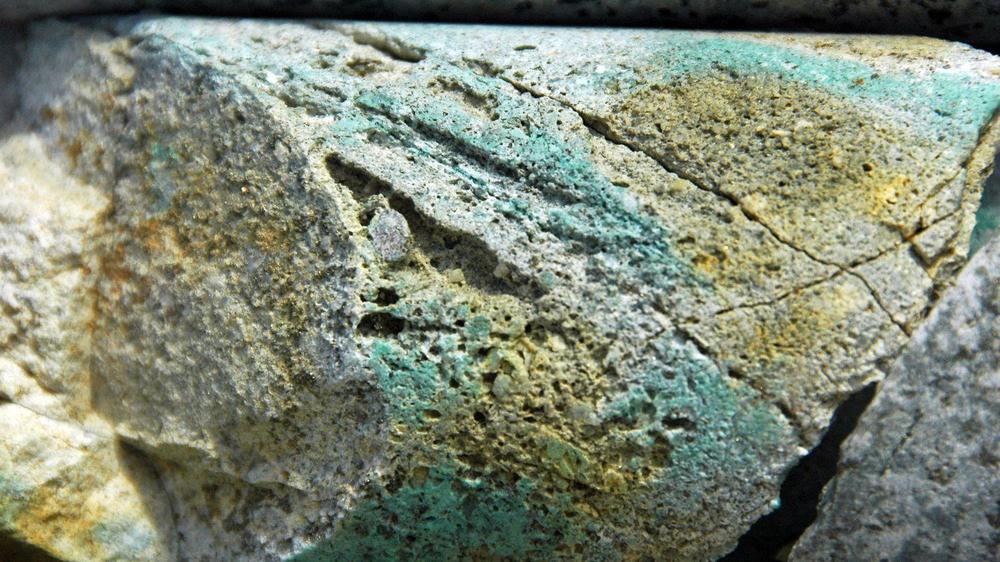
The owner of a mineral right rarely has access to the global buyer — and almost never at the cost of proving it under the code that buyer requires. IncorpMine takes on that journey.
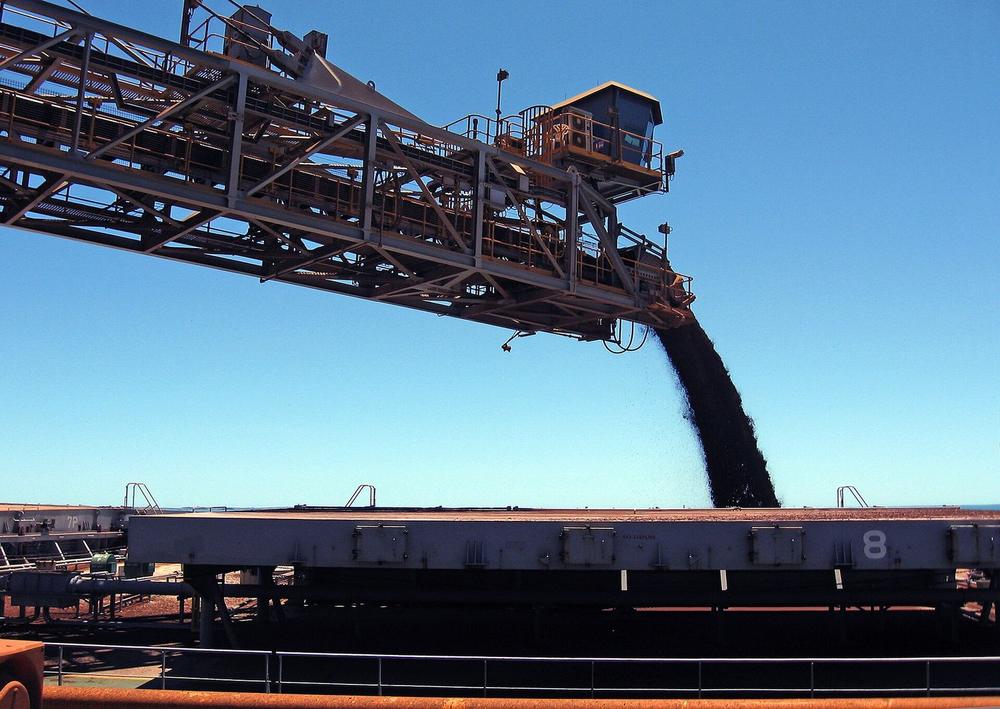
For the international mining company and investor, Brazil is one of the world's great mineral frontiers — and one of the hardest to read from a distance. IncorpMine delivers the asset legible.
IncorpMine LLC, a Delaware company, develops Brazilian mineral assets and prepares them for independent reporting under CRIRSCO-aligned codes — JORC, NI 43-101, S-K 1300 — with independent Competent or Qualified Persons, bilingual documentation and escrow-based structures. Assets are presented privately to qualified counterparties. Write to [email protected].
In a market where the signature crosses jurisdictions, compliance is not an appendix to the deal — it is the condition for its existence. Every move IncorpMine makes happens within valid titles, active licenses and fulfilled obligations.
An independent Competent or Qualified Person (an IncorpMine rule, applied in every case), verification of the database (QA/QC, accredited laboratory, chain of custody) and documented geological analysis. No figure enters a report without someone independent to sign it.
Compliance in every jurisdiction involved: the ANM, the state environmental agency and, where applicable, ICMBio, Funai and Iphan; monitoring of each phase's obligations — the annual hectare fee (TAH) during exploration, the Annual Mining Report (RAL) and CFEM royalty during mining — and of licence conditions.
Escrow as the rule, conservative scenario modeling and a capital structure designed so that no party depends on the other's goodwill.
ESG practices from conception: environmental licensing fully respected, a recovery plan wherever there is extraction, and dialogue with surrounding communities.
Alongside asset development, IncorpMine maintains the aggregates vertical that was born from the ecosystem's internal need: to ensure a reliable, traceable and licensed mineral input for the group's own developments — crushed stone, sand and earthworks materials, with the surplus offered to third parties under contract.
Owners of mineral assets hear plenty of promises. Here, every step has an owner, a deadline and a written form before it happens — and you know from the start what comes next.
Through the form or the preliminary reading on this page. No documents at this first stage, and no sensitive data.
The reply is personal, within 2 business days. Nothing you send is exposed: the reading is internal.
Title, licenses, geological data, logistics and liabilities. If moving forward makes no sense, we say so early — declining early is part of the service.
An option with written term and rules, certification funded within the transaction structure, and payment protected by escrow.
The preliminary reading on this page asks for no documents and no payment. When an asset moves forward, the technical certification work is carried out and funded within the purchase-option arrangement, set out in a contract before any work begins.
It stays with IncorpMine's team: the reading is internal and the reply is personal. Your asset is never advertised — when it is presented to buyers, it goes to qualified counterparties, one at a time. Data handling follows our Privacy Policy.
They are codes for the public reporting of mineral resources and reserves, all aligned with the CRIRSCO international template and sharing the same categories. JORC (2012 edition; a new edition is being finalized) governs the exchanges of Australia and New Zealand; NI 43-101, issuers disclosing mineral projects in Canada (TSX, TSX-V, CSE); S-K 1300, SEC registrants in the United States; the CBRR Guide is the Brazilian code, whose categories ANM Resolution 94/2022 adopted for exploration reports and economic development plans. An estimate made under another code enters the destination market as a “foreign estimate”, with cautionary statements and a verification deadline (ASX, rule 5.12; NI 43-101, sections 7.1 and 2.4); that is why the choice starts from the counterparty's market, and the data is prepared to be restated under it. That is part of the asset reading.
A Competent Person (JORC) or Qualified Person (NI 43-101 and S-K 1300), with at least five years of relevant experience — under JORC and S-K 1300, in the deposit type and the activity (exploration, resources or reserves); under NI 43-101, in exploration, mine development or project assessment, with experience relevant to the project — and a member of a recognized professional organization with disciplinary powers. JORC and S-K 1300 do not require this person to be independent (they require disclosure of ties and conflicts); NI 43-101 requires an independent Qualified Person for the first disclosure of resources or reserves on a material property and in a prospectus (section 5.3). IncorpMine adopts independence as its own rule in every case. It coordinates and funds the work within the transaction structure, but does not sign; whoever signs answers for the report.
Yes. The preliminary reading exists precisely to show where your asset stands on the path: what it already has, what is missing and what the next move would be. Assets at different stages call for different paths — and saying early when there is no path is also part of the service.
Through escrow: the funds are held by an independent agent and released only when the formal transfer of the asset is completed. In Brazil, the assignment of a mineral right is valid only once recorded with the ANM (Mining Code, art. 55, §1, for concessions; Decree 9,406/2018, arts. 42 and 44, for permits, licence registrations and PLG); that is the formal transfer. It protects owner and buyer at the same time.
Because it is the corporate and legal framework international buyers know: in 2024, 66.7% of the Fortune 500 were Delaware entities and 81.4% of US-exchange IPOs chose Delaware (Division of Corporations, 2024 Annual Report). IncorpMine LLC is organized in Delaware so that the cross-border transaction happens under a contract both sides recognize. What the LLC does not do is hold mineral rights: the Constitution (art. 176, §1) requires exploration and mining to be carried out by Brazilians or companies organized under Brazilian law, with headquarters and management in the country. The title remains under Brazilian law and the transfer takes place by assignment recorded at the ANM.
Yes. The aggregates vertical supplies the group's projects and offers the surplus to third parties under contract: crushed stone, sand and earthwork materials, with licensed and traceable origin. In the form, choose “Buy aggregates”.
Through the form, choosing “I am a technical expert or auditor”. The technical report depends on an independent Competent or Qualified Person, and your message gets the same personal reply.
Full technical glossary, EN↔PT, with the source of each term
Present your asset, your buy-side mandate or your aggregates demand. No information received here is disclosed: the reading is internal, and the response is personal.