How an asset in the exploration stage can generate revenue
The general rule dictates that commercial mineral extraction may only occur after a mining concession is granted. Brazilian legislation, however, admits a regulated exception: the Utilization Permit, authorized by the ANM, which allows for limited extraction prior to the concession. This provision directly impacts the financial viability of projects in the exploration stage, as it can accelerate revenues or generate additional regularization costs. Understanding the requirements, deadlines, and limits of the Utilization Permit is essential for accurately assessing cash flow and the risks associated with the development of mineral rights.
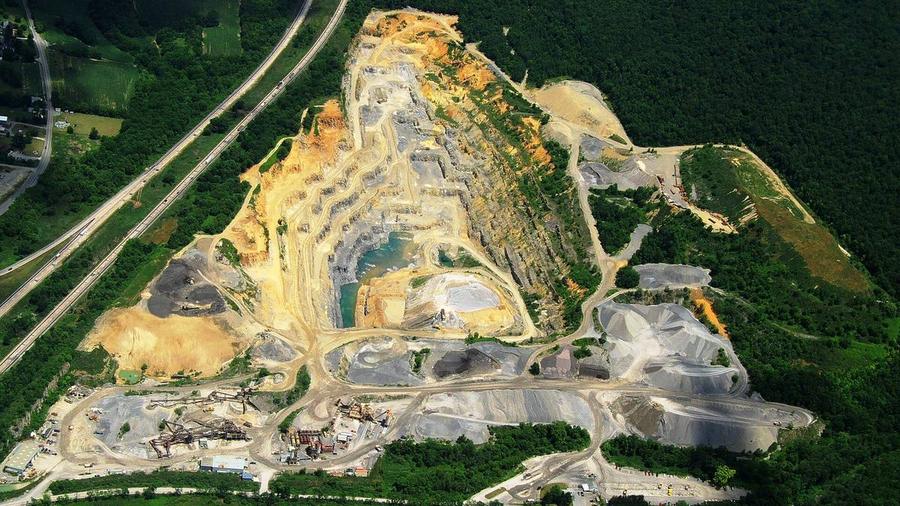
The general rule and the exception: extraction before the concession#
Current regulations stipulate that mineral extraction for commercial purposes depends on the existence of a mining concession, an instrument that confers the right to exploit under a private ownership regime. Without this title, operations are considered illicit and subject to administrative and criminal sanctions. Decree 9.406/2018, in its art. 24, creates an exception: extraction of an exceptional nature may be authorized before the concession, provided that a Utilization Permit is issued.
The Utilization Permit functions as a temporary administrative act, limited to specific situations and a defined period. The decree establishes that the standard term varies from one to three years, with the possibility of extension subject to further evaluation by the ANM. This extension does not alter the provisional nature of the authorization, which remains subordinated to the subsequent attainment of a mining concession. Thus, the exception does not eliminate the need for the concession, but allows for limited extraction activities to be conducted while the concession process is being concluded.
Hypotheses that authorize a Utilization Permit#
ANM Resolution 37/2020 lists the circumstances in which a Utilization Permit may be granted. Each hypothesis requires specific documentation and proof that the activity does not compromise the future concession or the environment.
- Assess the technical-economic viability of the ore in the national or international market before committing capital to a full concession.
- Conduct industrial trials that require actual ore volume, beyond what an exploration sample would entail.
- Market the extracted product, when the ANM deems such commercialization appropriate in the specific case.
The granting of the Permit depends on the ANM's analysis regarding the adequacy of the documents and compliance with safety, occupational health, and environmental protection requirements. The agency may request adjustments or conditions before issuing the authorization.
Deadline and quantity limits per substance#
According to Decree 9.406/2018, the Utilization Permit has an initial validity of one to three years, with the possibility of a single extension, provided the holder justifies the need for continuity and maintains the established extraction limits. ANM Resolution 37/2020 defines specific quantitative limits for each mineral substance, based on economic viability and environmental impact parameters.
The maximum limit varies according to the nature of the mineral – for instance, precious metals have more restricted quotas than civil construction minerals. The measurement of the extracted quantity must be accompanied by monthly reports to the ANM, which verifies compliance with the approved limits. Failure to comply with these limits may lead to the revocation of the Permit, administrative fines, and, in serious cases, the suspension of subsequent concession processes.
Illustrative scenario: imagine a titleholder who, upon starting copper extraction under a Utilization Permit, exceeds the established limit by 30% without notifying the ANM. The authority detects the deviation during a quarterly audit and revokes the Permit, halting the operation. Beyond the immediate loss of production, the titleholder faces fines and the need to reopen the concession process, which may be reassessed with greater rigor due to the history of non-compliance. The additional delay directly impacts the development schedule and reduces the confidence of investors who depend on the predictability of cash flows.
What this means for an investor assessing the cash flow of an asset in the exploration phase#
For an investor, the existence of a Utilization Permit alters the projection of revenues and costs in three main aspects. First, the possibility of generating revenue prior to the concession reduces the typical “cash-burn” period of exploration projects, allowing for the accounting of short-term revenues. Second, the costs associated with obtaining and maintaining the Permit – administrative fees, environmental monitoring, and potential extensions – must be incorporated into the financial model as recurring operating expenses.
Third, the temporary nature of the Permit introduces the risk of early interruption. If the operation exceeds the quantity limits or the established deadline, revocation may result in a loss of production and the need to renegotiate the concession schedule, impacting the internal rate of return (IRR) and the net present value (NPV) of the project. Thus, when modeling cash flow, the investor must include sensitivity scenarios that consider the probability of Permit extension, variations in extraction limits, and compliance costs.
The analysis must also consider the regulatory sequence: the Utilization Permit does not replace the mining concession, and obtaining the latter remains a condition sine qua non for the continuation of commercial-scale exploration. Therefore, risk assessment must weigh the probability of concession approval, the expected time for it, and the interdependence between the Permit and the concession. Incorporating these elements ensures that the financial model realistically reflects both the opportunities and vulnerabilities inherent to the exploration stage.
A detailed understanding of the Utilization Permit, its requirements, deadlines, and limits, allows the investor to structure a cash flow that recognizes the competitive advantage of early revenues while controlling the risks of regulatory interruption. This approach, aligned with the Brazilian regulatory framework, ensures that the evaluation of assets in the exploration stage is based on verifiable technical parameters, maintaining consistency with the practices adopted by the main global players in the mining sector.
 This articlepoint your camera
and take it with you